The Eleven Municipalities of Zug: Where to Live, and Why It Matters
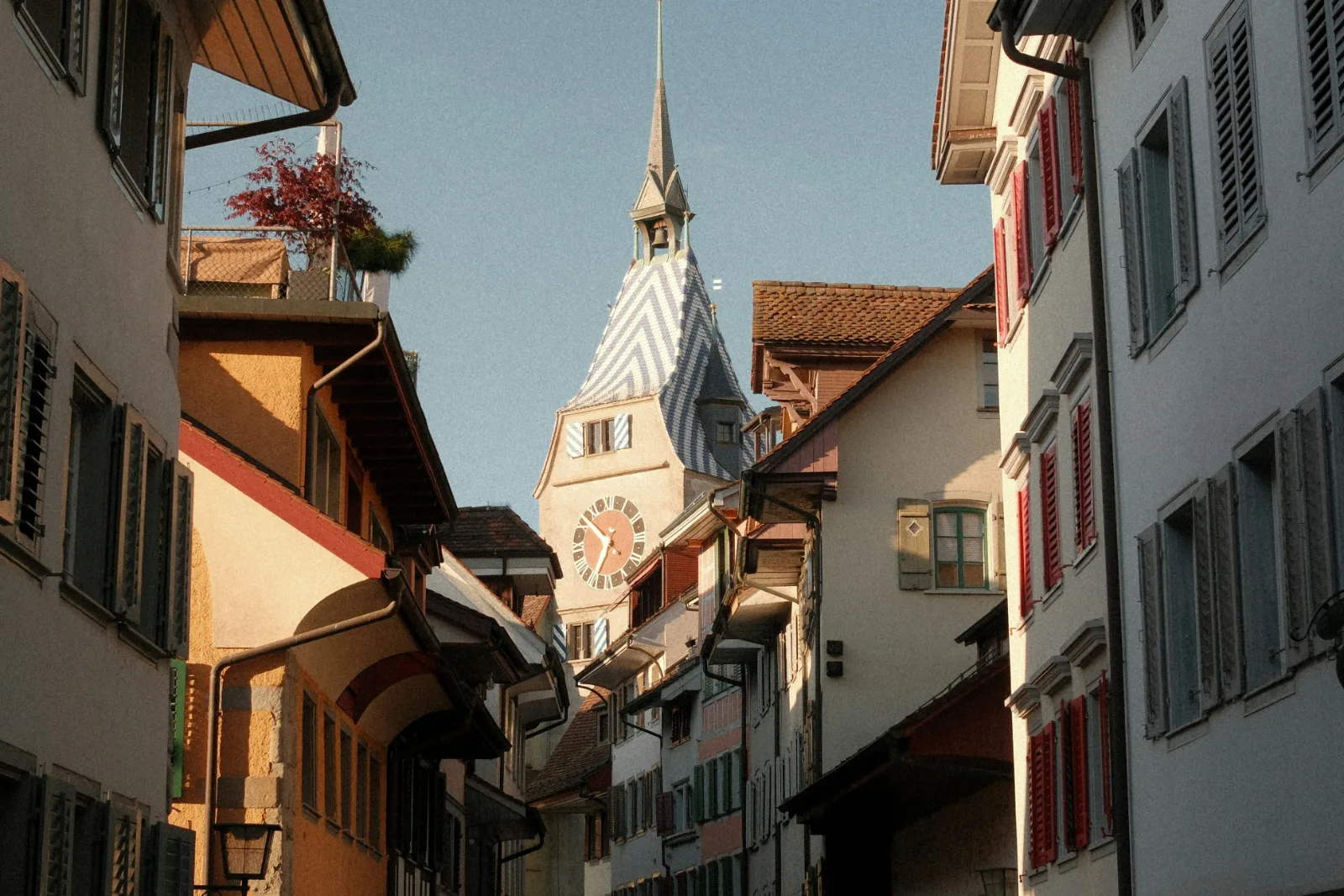
Zug is small enough to cross in half an hour and varied enough that the choice of municipality shapes daily life for years. Eleven municipalities share the canton, and the municipal tax multiplier alone ranges from 51 per cent in Baar to 65 per cent in Neuheim. Lake access, school options and the commute to Zurich vary just as widely.
Most people arriving in Zug have already decided on the canton. What they have not decided — and what they are rarely given a straight answer about — is where inside it to live.
The tax picture, and what it does not tell you
Swiss municipalities set their own tax multiplier, expressed as a percentage of the simple cantonal tax. Below are the figures published by the Cantonal Tax Administration of Zug for the 2025 tax year.
| Municipality | Tax multiplier 2025 |
|---|---|
| Baar | 51.00% |
| Zug | 52.11% |
| Walchwil | 53.00% |
| Cham | 54.00% |
| Hünenberg | 54.00% |
| Oberägeri | 54.00% |
| Steinhausen | 54.00% |
| Unterägeri | 54.00% |
| Risch | 55.00% |
| Menzingen | 59.00% |
| Neuheim | 65.00% |
The spread looks dramatic. In practice it is the smallest factor in most decisions we handle.
Two reasons. First, the difference between the highest and lowest multiplier in Zug is narrower than the difference between Zug and almost any neighbouring canton — the choice that mattered most was already made. Second, housing costs and availability can outweigh relatively small differences in municipal taxation.
The families who are happiest after three years are, in our experience, rarely the ones who optimised the multiplier. They are the ones who chose for the school run, the lake, or the commute.
The lakeside municipalities
Zug itself is the obvious starting point. The old town sits directly on the lake, the railway station reaches Zurich in around twenty-five minutes, and the concentration of international companies means the professional network is immediate. It is the least isolating place in the canton for someone arriving without local ties. Walchwil occupies the south-facing slope on the eastern shore, a strip of terraced vineyards and lake views sometimes called the Zug Riviera. It is the most scenically privileged address in the canton and priced accordingly. It suits people who want the view and do not mind a quieter, more contained village life, with a car for most errands. Cham sits at the northern end of the lake with genuine shoreline, the Villette park, and a settled family character. It is less rarefied than Walchwil and less urban than Zug, which is precisely its appeal to families who want lake access without a premium address. Risch-Rotkreuz has grown quickly. The Suurstoffi district around the campus and station has drawn a younger professional population, and the rail connections reach both Zurich and Lucerne. Parts of the municipality are traditional lakeside village; parts are new build. It is worth visiting both before forming a view.The Ägeri valley
Oberägeri and Unterägeri sit on the Ägerisee, ten minutes further into the hills. Quieter, more traditional, more Swiss in daily texture, with real access to the mountains. Families who intend to stay a decade often end up here. Families on a three-year assignment usually find the distance from the international schools and the airport harder to justify.Inland
Baar is the canton's most tax-favourable municipality and its second-largest. It is well served by rail, has substantial local employment, and offers a broader range of housing than the lakeside communities. It is the pragmatic choice, and it is chosen often. Steinhausen is central, residential and unshowy, well placed for reaching most of the canton quickly. Hünenberg is more rural and more spacious, with a strong local community and the lowest density of the western municipalities. It suits families who want land. Menzingen and Neuheim sit higher and further out. Both are small, rural and quiet. For the right household — one that genuinely wants space and stillness, and does not commute daily — they are the best value in Zug. For most arrivals, they are too far from the infrastructure the first year depends on.Planning a Move to Zug?
Our team is ready to guide your transition with the discretion and care you deserve. Let us start a conversation.
What actually decides it
After nearly two decades of these conversations, the pattern is consistent. Four questions settle the municipality far more reliably than the tax table.
Where will the children go to school? International school, bilingual, or Swiss public — the answer narrows the map immediately, because the daily journey has to be sustainable. Where are you commuting to, and how often? Two days a week in the office and five days a week are very different starting points. The best municipality depends not only on frequency, but on direction: Zug, Baar and Risch-Rotkreuz work particularly well for regular rail commuting. How long is the horizon? A three-year assignment and a permanent move can lead to different priorities. For a shorter stay, flexibility and ease of moving again may matter more. For a long-term move, factors such as schools, neighbourhood character, community, housing supply and whether the municipality still works for you in five or ten years become more important. One car or two? In Zug, Baar and Cham, many households can manage comfortably with one car thanks to public transport and everyday amenities. In more dispersed municipalities such as Walchwil, Menzingen and Neuheim, a second car can become significantly more useful depending on where you live, where you work and how often you need to travel.Where to start
If you are early in the process, the most useful thing you can do is spend two days in the canton before deciding anything. Walk from the station in Zug, drive the shore road to Walchwil, take the road up to Ägeri, and see how far Neuheim actually feels. Almost everyone revises their assumptions after that.
We arrange these orientation visits regularly, including school appointments and a realistic view of what is currently available in each municipality. If it would help to talk it through first, we are always glad to.
Jenny Albrecht
Relocation Manager, Lifestylemanagers